
Five Years and Growing: A Celebration of Rosario Saravia
There are people who improve a space through quiet presence rather than spectacle. Rosario is one of those people. equalshuman recognizes her creative gifts and also her five years of dedication: to the work, to the community, and to her own growth. The main message this month is to honor Rosario, whose daily presence exemplifies creativity and commitment.
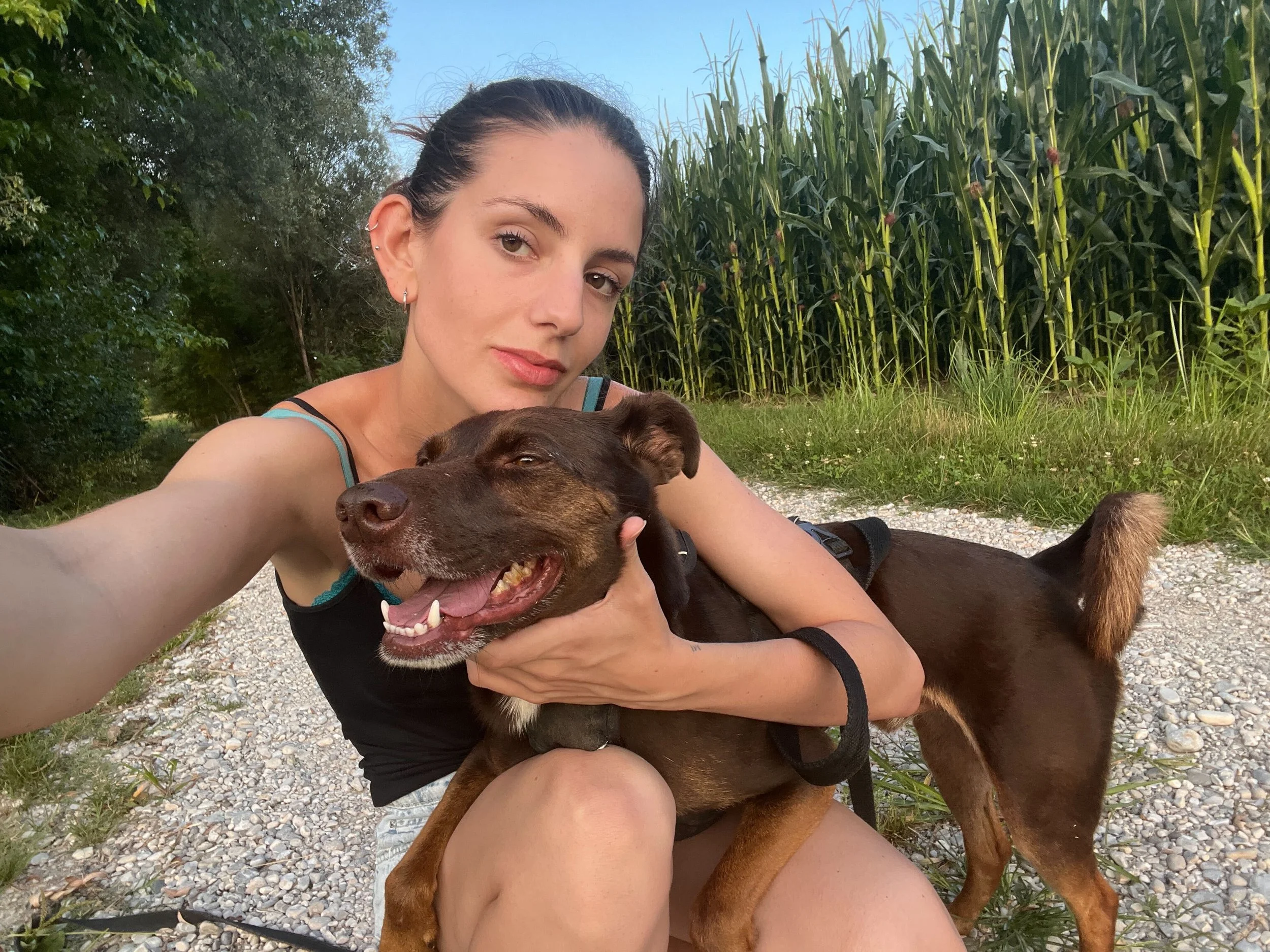
This month, the EQH team assembled, not just to interview Rosario, but to honor her. What unfolded was something warmer and richer than a formal sit-down: it was a conversation between people who have progressed alongside each other, who have watched one another struggle and evolve, and who understand that creativity, when it is real, is inseparable from the life being lived around it.
Ask Rosario what she does, and she pauses, thoughtful. Although trained in fashion design, she extends her practice to photography, graphic design, music, and the quiet yet radical act of dressing with intention. She doesn’t see these as separate fields. Instead, they are different rooms within the same house—all her own.
“I genuinely enjoy doing everything, creatively speaking,” she says. “For me, it’s more about learning all I can from all these faculties I enjoy and trying to create something of my own, which does not necessarily have to be just one of them.”
Fashion was her first language. She grew up dressing expressively, using clothes to say something, to show something, to occupy space deliberately rather than disappear into it. Then immigration happened, and survival mode quietly swallowed that instinct. She dressed to dress. She kept going. It wasn’t until this year that she looked up and said, "I want to go back to that person." The one who chose clothes based on how she was feeling, where she was going. The one who let herself be seen.
She is going back.
What Immigration Taught Her
Rosario emigrated from Argentina. She now speaks about it with clarity that comes only with distance and time. Immigration, she explains, disrupts every aspect of your life. It doesn’t simply move you geographically; it rearranges your sense of self, priorities, and needs.
For years, she had believed that creativity was her highest priority in relationships. That she could live without her friends, if she had to. That the work was enough.
“Once you leave everything you have — your family is far away, your friends — you actually come to realize how difficult it is to make new friends and explain again who you are, what you do. You realize all the time you invested with lots of people who live across the ocean today.”
What she found on the other side of that realization was not just loss, but perspective. Rosario now understands that creativity and connection support each other. Community helps creativity endure. Whether with her friend in Buenos Aires or the EQH team here, Rosario's journey highlights the importance of staying connected to others.

Letting Go of Entrepreneur, Coming Home to Creative
One of the most powerful moments came when Rosario described a realization she had late last year. For years, she told herself, "I am an entrepreneur. I have to build something. It has to sustain me.”
Each time she started something personal, it would drift toward becoming a social media package, a branding project, or a client website. Not because she wanted it to, but financial pressure pushed it in that direction.
“I was completely drained. Everything I tried to do ended up looking like everything else — because it had to be easy to sell, easy to sell, easy to sell. And I realized: I don’t like it.”
So she changed how she spoke about herself, no longer identifying primarily as an entrepreneur. By calling herself a creative, she began to separate personal creative work from financial pressures. This structural change allowed her creative work to begin without being tied to immediate financial needs, supporting her peace of mind.
“It really changed my mind the way that I was living,” she says. “Now I really am in peace.”
Jess recognized it immediately: “You know yourself.” And she’s right. Rosario’s decision wasn’t a retreat. It was a deeply intelligent act of creative self-preservation.
The List of 150 Things
Leave it to Rosario to address the problem of idle time with both imagination and rigor. After realizing she was defaulting to mindless scrolling whenever she had a spare moment — not because she wanted to, but because she didn’t know what else to do — she sat down and wrote a list. By hand. One hundred and fifty things to do when time opens up unexpectedly, none of which require money, social media, or a lot of materials.
The list is wonderfully, characteristically her: research ancient Greece; read five poems; listen to an entire album focusing only on the drums; investigate a weird animal (the axolotl and the okapi both appear); go for a walk without your phone, without music, without anything; choose a word and explore what it produces in you; write a poem.
She also described a weekly ritual of giving a boutique music service her favorite artists and asking it to suggest something new, as a way to intentionally expand her sonic world rather than rely on the algorithm. This year alone, she has already fallen in love with three new artists, including one she now has on loop and wants to build a video around.
These are not just hobbies; they are, as Jess called them, tools in a spiritual toolbox Rosario has built for herself. She uses this list to stay grounded and resilient. Her approach is a reminder that each person can assemble their own list of meaningful actions, tailored to what brings comfort and restoration. The message: your toolbox is personal and a resource you create for yourself.
Five Years at EQH
Rosario has been with equalshuman for five years. That is not small. EQH does not operate like a typical workplace. It attracts people who believe fashion can be ethical without lacking joy, creativity can be communal without compromise, and a brand can hold appeal and values without choosing between them.
Rosario arrived already knowing, intuitively, that this was possible, and EQH gave her a space to see it lived out. “I always thought that liking fashion was sort of shallow,” she admits.
“And then I grew to realize it can be different. You can really make a change and enjoy it in your own way.”
In five years, she has contributed not just her skills in design, photography, and visual communication but also her character. Jess, who has watched her grow from close range, described it plainly and beautifully: “You have beautiful energy. You have such a presence about you that is so compassionate and understanding and caring.”
At one point during the call, there was a long, thoughtful pause after Rosario shared how she was learning to slow down and choose herself. Brandi simply nodded and said, "I think that's the most important part." In that quiet support, a feeling settled over the whole team—a sense that it was not just about creative discussion but a real invitation to take care of yourself, to honor what you truly want, to lay the foundations for peace now, in this moment, even in the middle of chaos.
Rosario’s Recipe
When asked at the end of the conversation what she would say to someone still in a struggling mindset, Rosario hesitated; not from a lack of wisdom, but from humility. “I don’t know if I’m anyone to give advice,” she said. She is.
Her recipe is this: go back to the basics. Eat well. Move your body. Sleep. Go for a walk. Talk to someone. Write. Meditate, even for five minutes. These are the things she has learned we stop doing precisely when we need them most, replaced by screens, junk food, late nights, and deeper isolation.
“We do the opposite of human nature,” she says, “so for me it’s that, the basics. The pillars.”
She carefully notes that balance is crucial. Rosario learned that extremes, like rigid schedules and discipline, are not sustainable. Instead, she now focuses on making daily choices that prioritize her well-being. Her main message is to seek balance rather than perfection or performance.
“You have to be your own priority. Always. If not, you won’t be there for anything else — not work, not family, not friends. Anything.”
What’s Coming
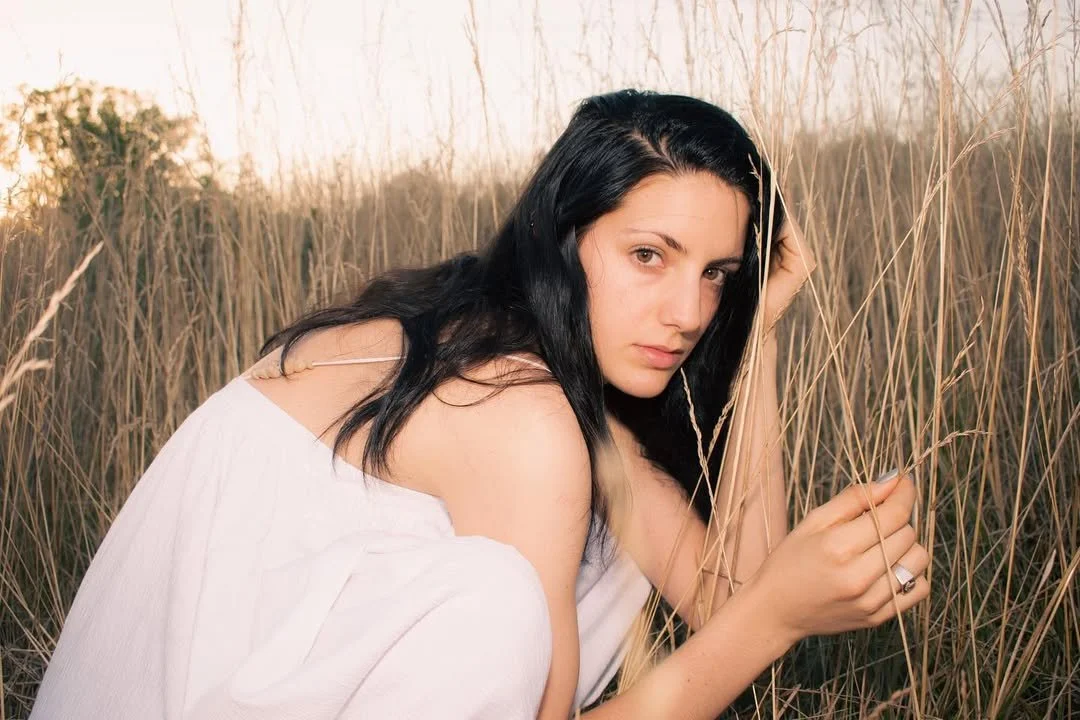
Rosario’s personal project is still forming, taking the shape it needs to take, in the time it needs. She is not rushing it. She is building her financial foundation first, clearing the ground so that when she begins, she can begin freely. What she does share are glimmers of what might come: blending her passions for fashion and photography in a series of self-portrait explorations, or possibly creating a multimedia collection that traces how clothing and memory are intertwined. She speaks about making space for personal expression, reconnecting with her roots, and maybe even designing an exhibit or platform where stories of immigration, creativity, and resilience can coexist. Whatever shape her project eventually takes, it promises to be deeply personal. An honest reflection of her journey, vision, and heart.
What that project looks like, exactly, remains hers to discover. But the people who have sat with her, worked next to her, and watched her think… they are not worried. They are excited.
Welcome to the spotlight, Rosario. It has been waiting for you.
